CCA Alert Banner
CCA will close in June 2027.
Sustainable architecture: The greenest solution?
Researching architectural design programs? If so, you’ve probably read a lot about “sustainability” or “green architecture.” But professors from ÐӰɴ«ý explain why sustainable architecture isn’t enough—instead, they advocate for resilient design to meet the challenges of a warming planet.
According to a 2020 , buildings and construction account for nearly 40% of CO2 emissions and 35% of energy consumption globally. Clearly, the architectural profession needs to take action to reduce these alarming numbers.
ÐӰɴ«ý (CCA), a top-ten art and design school, is committed to responding to the climate change crisis. The college’s architecture and interior design programs are on the cutting-edge of this work, moving beyond the idea of sustainable architecture to embrace an approach that focuses on the urgent need for climate resiliency.
Brian Price, chair of CCA’s master of architecture program, explains, “In our work at CCA, we are exploring how we can both mitigate the drivers of climate change and adapt to a changing climate.”
Through research and teaching, CCA’s interior design and architectural design faculty are proposing innovative solutions for today and preparing the designers of tomorrow to meet the challenges of rising sea levels, historic droughts, and more intensive and frequent wildfires.
Resilient versus sustainable architecture
“The term ‘sustainability’ is problematic,” says Amy Campos, chair of the interior design program at CCA. It suggests passivity, or maintaining the status quo. She prefers the term “resiliency.”
Antje Steinmuller, chair of the undergraduate program in architecture at CCA, agrees. “At CCA, we like to think of building for climate resilience and climate adaptation, versus green building or sustainable architecture,” she says. “We need to be proactive, not reactive, to help reduce greenhouse gas emissions and protect communities already experiencing the effects of climate change.”
Originating in the 1970s back-to-the-land movement inspired by Stewart Brand’s Whole Earth Catalog, the idea of “sustainability” is not environmentally responsible from today's vantage point. “While it pioneered some off-the-grid solutions like solar energy, its focus on the individual and extracting resources from the land is the opposite of what we need today to respond to the climate crisis,” says Price. “It's actually more ‘sustainable’ in an age of climate change to live in dense cities, sharing resources, than in a rural environment.”
Similarly, Price says we need to think beyond LEED (Leadership in Energy and Environmental Design). Since 1994, the LEED certification program has set performance standards for sustainable architecture. “It was a good first step toward addressing sustainability in architectural design—it encouraged architects, builders, and clients to consider the impact of construction on the environment. But today, we have better standards, like net zero, that are more holistic and respond to the present moment.” Net zero, the balance between the greenhouse gasses put into the atmosphere and those taken out, is the best way to reduce global warming.
Instead of checking boxes to earn LEED accreditation for new construction—for instance, incorporating eco-friendly building materials or solar panels—Price suggests that the first thing an architect must consider is, “Should I even build a new building at all?”
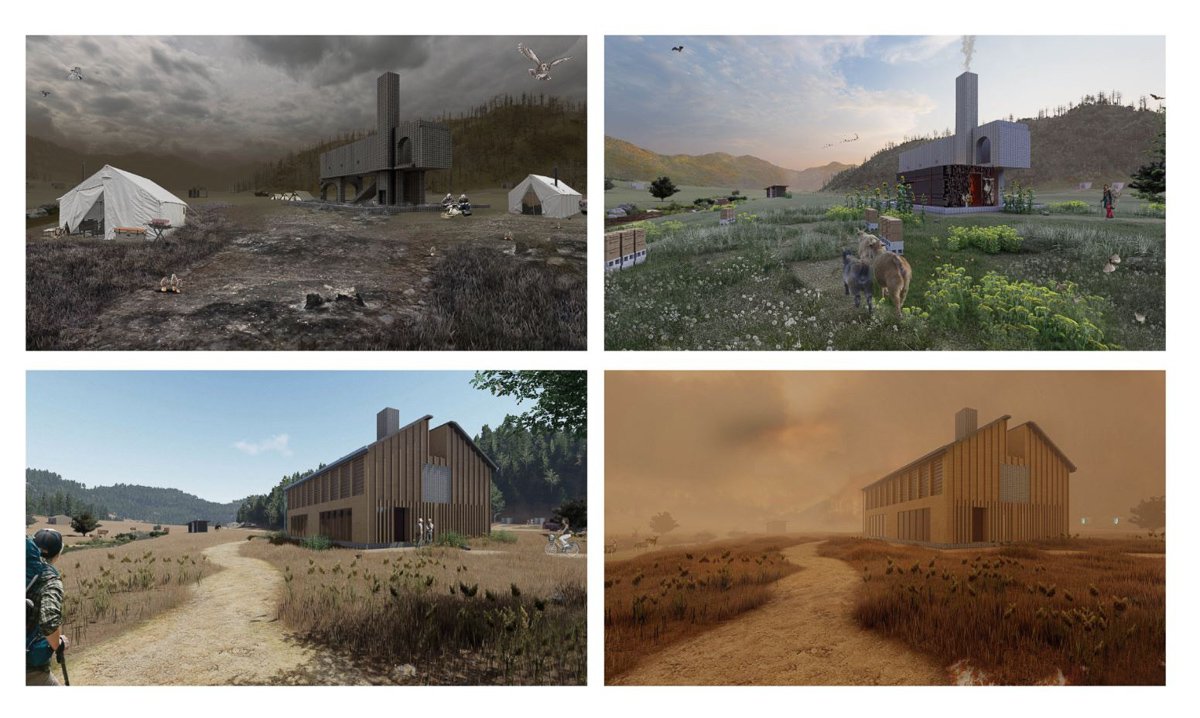
A house designed for fire resilience in the urban-wildland interface by Vishnu Balunsat (MArch 2020).
Adaptive reuse is environmentally responsible
Since the carbon footprint of new construction is enormous, architects interested in green design consider the possibility of repurposing an existing building, or adaptive reuse, as an alternative to new construction.
Campos points out that much of adaptive reuse is actually interior design. “Interior design is fundamentally eco-friendly: it’s all about adaptation, altering the interior of a building for a new use instead of tearing it down and constructing a new one,” she says. “It mitigates waste and resource extraction.”
The CCA campus in San Francisco is itself an example of adaptive reuse. Built in 1951 as a Greyhound bus maintenance facility, the vast, open structure was repurposed as a 51,000-square-foot open studio space ideal for creativity and collaboration. The adaptive reuse design won numerous awards, including several that acknowledged it as an outstanding example of green building.
And now designers are going beyond adaptive reuse to actually plan at the outset for a change of uses over a building’s lifespan. “When we design something, we need to anticipate its obsolescence,” says Campos. Students in CCA’s interior design program study transformable design—imagining spaces that can adapt for new users and functions—as a strategy for a more sustainable architecture.
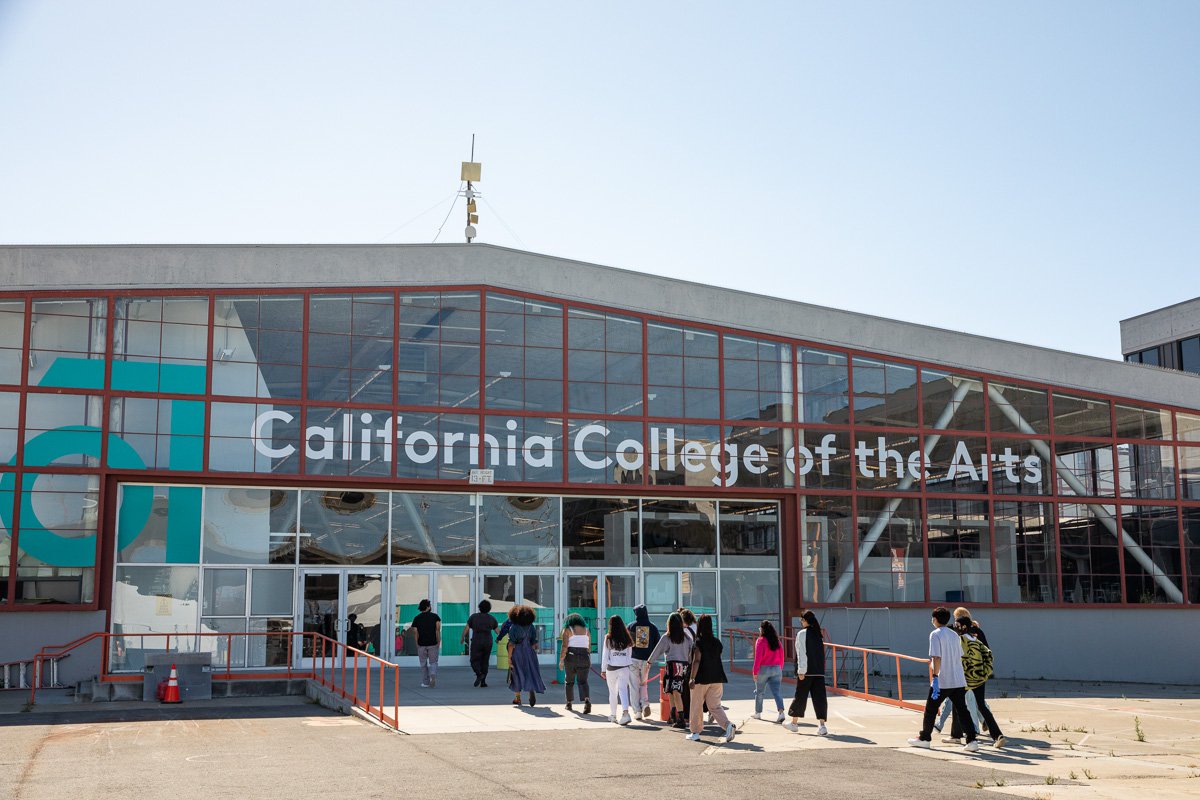
The main building on the San Francisco campus of the ÐӰɴ«ý, an example of adaptive reuse.
Environmentally responsible architecture: Building for climate resilience
Between rising sea levels, wildfires, and drought, the Bay Area is a testing ground for resilient building strategies that adapt to climate change. is investigating new ways to build along coastlines and in the wildland-urban interface—and questioning if we should even build in those zones.
“As designers, we need to fortify communities that will be impacted by climate change,” says Steinmuller. “For example, instead of building sea walls to keep water out of coastal neighborhoods, we are developing design solutions for living with sea level rise—it’s a paradigm shift to think about not sustaining, or preserving, the land we have but learning to live with tidal flow.” Steinmuller imagines a future where we live in houses on stilts and kayak to work.
A recent thesis project by a CCA architecture student addressed how to build in areas prone to wildfires, proposing a house that can burn and then regrow, like the trees in the forest.
“Projects like these suggest how architecture can adapt to a climate marked by sea level rise and increasing wildfires,” says Steinmuller.
Beyond sustainable architecture: toward climate action
CCA is integrating resilient design into all aspects of its architecture and interior design curricula, taking its cue from the . Climate action, with its twin strategies of mitigation and adaptation, affects everything from the selection of materials, to the layout and design of a building, to the arrangement of cities.
So, if you are looking for an architecture program that goes beyond considerations of aesthetics and form to put the health of the planet and the well-being of populations affected by climate change front and center, CCA might be right for you.
Published on April 14, 2022